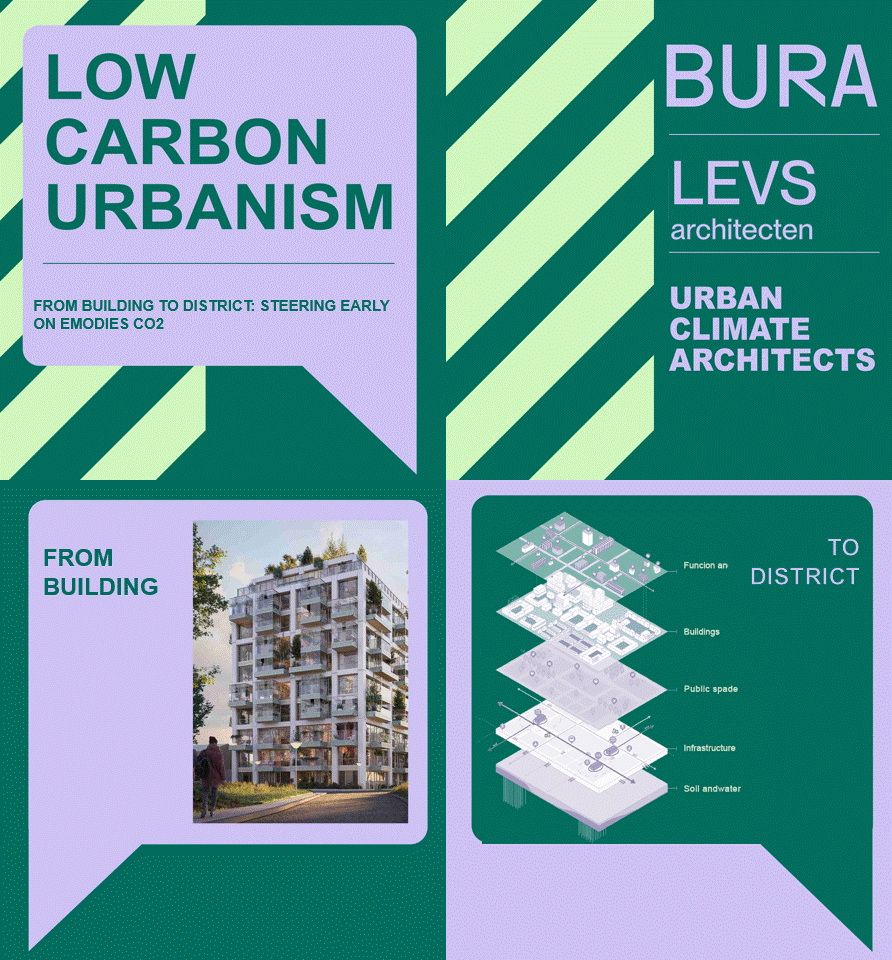
Download Low Carbon Urbanism: How urban design shapes the CO₂ footprint, and where we can intervene

As designers, we increasingly recognise that the greatest CO₂ impact does not arise within the building itself, but long before the first design is drawn. Not at the level of technical detailing, but in the way neighbourhoods and districts are structured.

With Low Carbon Urbanism, we show how choices related to soil conditions, mobility, density and public space often determine the carbon footprint of neighbourhoods for decades to come. If we want to make a meaningful impact on climate performance, intervention needs to happen earlier — at the scale of the urban area itself.

Download the handbook
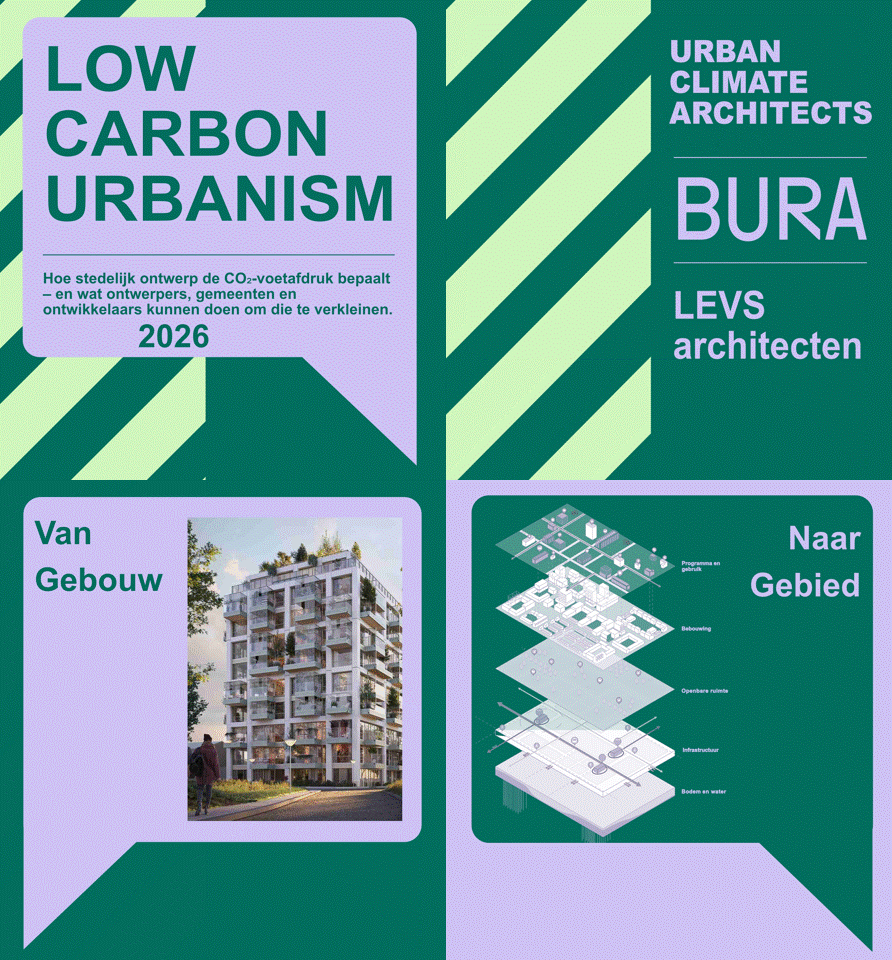
Low Carbon Urbanism 2026: Praktische gids voor duurzame gebiedsontwikkeling door UC Architects. Ontdek hoe steden, gemeenten en ontwerpers CO₂-uitstoot reduceren, van individuele gebouwen tot hele wijken.

Our vision

Why CO₂-aware urban design is urgent now

The task is growing, while the CO₂ budget is shrinking

We are working on projects at a time when construction volumes are increasing while the available CO₂ budget is rapidly diminishing. Decisions embedded in urban design and policy today will determine tomorrow’s emissions.

The real impact lies in front of the building

The focus is still often on the building itself, while in our projects, we see that infrastructure, soil and public space control the majority of emissions. Area design lays the foundation; the building follows.

Building within planetary boundaries requires guidance

Municipalities, designers and developers need tools to translate climate ambitions into concrete choices. With this research, we show where intervention is possible — and where it truly makes a difference.

Low Carbon Urbanism 2026: Praktische gids voor duurzame gebiedsontwikkeling door UC Architects. Ontdek hoe steden, gemeenten en ontwerpers CO₂-uitstoot reduceren, van individuele gebouwen tot hele wijken.

Our key insights into sustainable urban planning

Most of the CO₂ is fixed before the first design
Area decisions are made early and can hardly be corrected later.

Biobased construction only works in conjunction with urban planning
A biobased building helps, but does not solve the layers of the area. Both are necessary.

Compact cities perform better
Less m² per person means less material, less infrastructure and more quality.

These insights are in line with what we experience on a daily basis in design and projects.

Download the handbook
Download the study for a comprehensive overview of environmental data and material comparisons.

From building → to area

When we map CO₂, we always see the same pattern:
the building is not the problem, it only comes into view too late.

First, we determine:

• how much infrastructure is needed
• how people are going to move
• how soil and water are arranged
• how many m² per person will be built
• what materials the public space requires

Only then do we design the building. That's where the fault line is — and that's where the profit lies.

Cases: from theory to practice

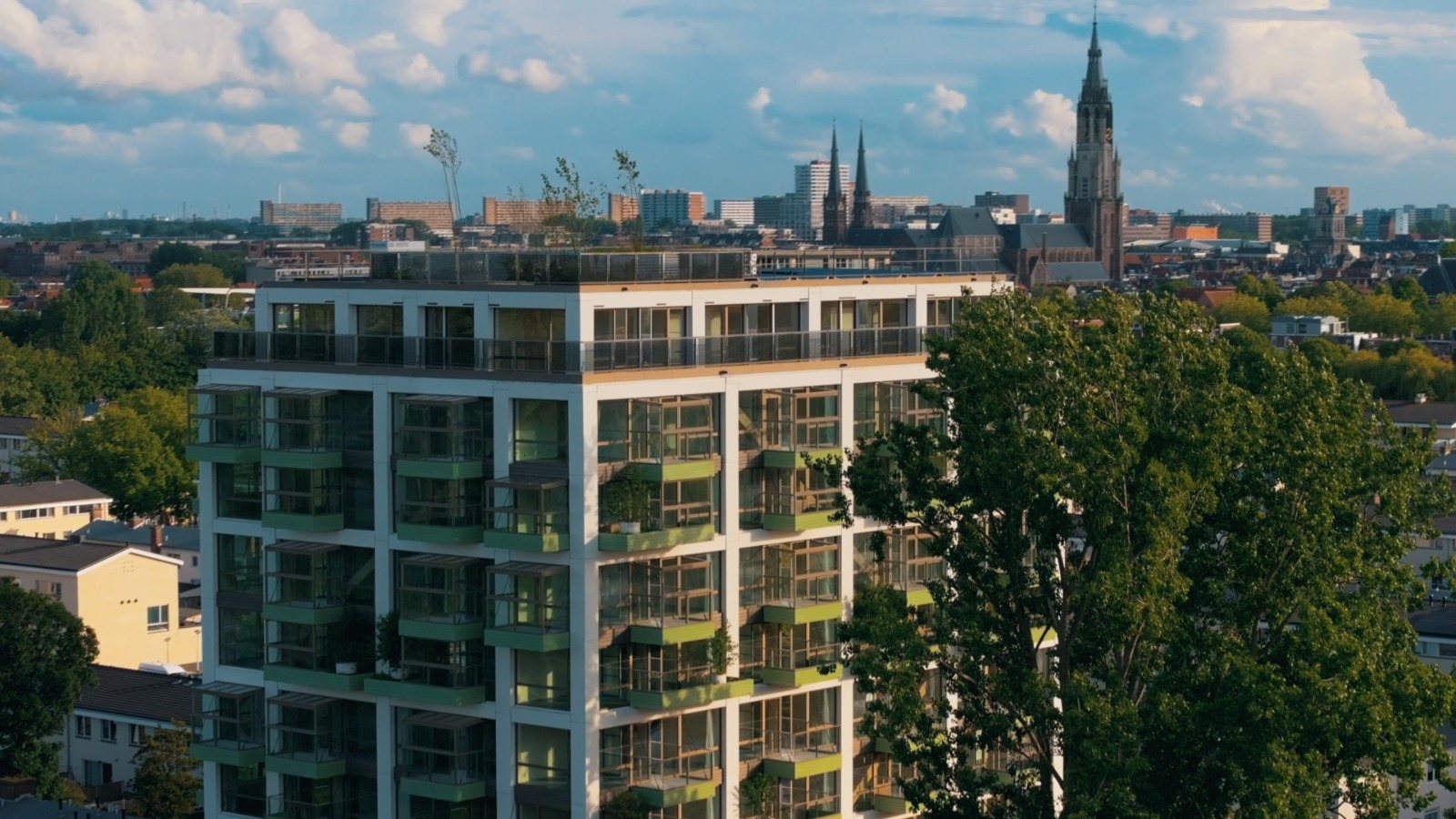
The Urban Woods — less m², more life

A wooden residential building where compact homes, shared spaces and biobased materials come together. A healthy, warm living quality with a low CO₂ impact.

Schiehaven North — densifying with a vision

Area development focused on reuse, climate-adaptive public space and smart urban densification.

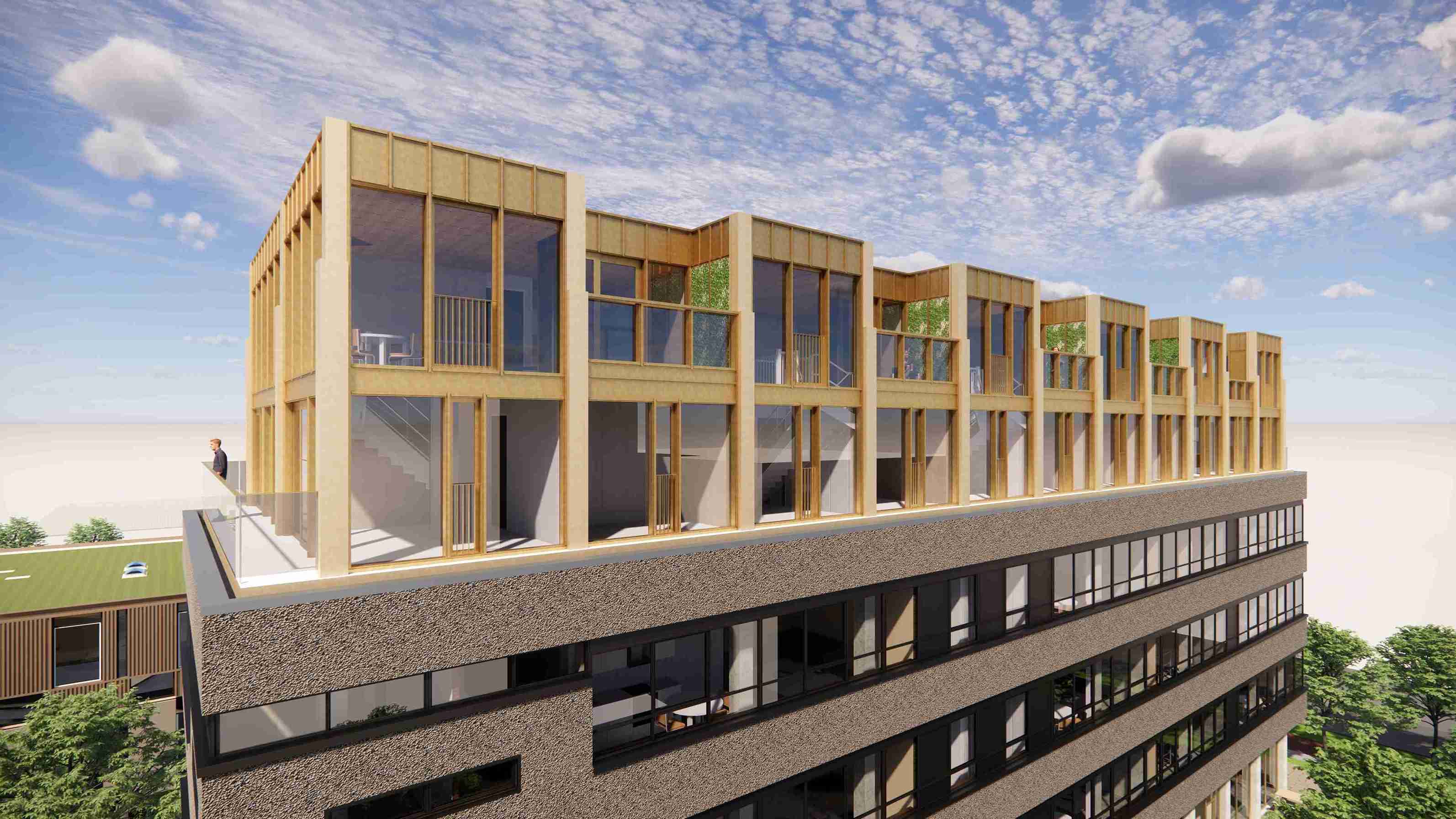
Top ups and transformation

By using existing buildings and cleverly densifying them, the additional CO₂ impact remains minimal, while the city gains space.

Download the handbook

Download the handbook
Download the study for a comprehensive overview of environmental data and material comparisons.

Looking for more information or interested in collaborating?

Get in touch for more information or collaboration.

Tim Vermeend

Ontvang de volledige onderzoeksresultaten

Download the research

Enter your details and receive the PDF instantly, including measurement data, graphs and recommendations.

Ontdek alle inzichten uit dit onderzoek
Klik hier om het onderzoek te downloaden
Oops! Something went wrong while submitting the form.

Methodology

Low Carbon Urbanism research design

Low Carbon Urbanism was developed by Urban Climate Architects in collaboration with BURA country LEVS architects. By connecting design, urban planning and research, an integral picture of low carbon urban development.

For this research, we have:

7 district profiles analyzed
3 material scenarios developed (traditional/hybrid/biobased)
building + infrastructure + public space calculated
LCA data linked to urban parameters

This creates a complete picture of the CO₂ impact from area to building — and where the greatest opportunities lie to steer.

Conclusion

If you want to reduce the CO₂ impact of cities, you need to start earlier. Not at the level of the building, but at the scale of the area. Biobased and circular solutions only deliver their full value within well-considered urban planning. Building less, sharing more intelligently and densifying in the right places is what makes cities truly future-proof.

Download the handbook
Download the study for a comprehensive overview of environmental data and material comparisons.

projects

Application in projects

Discover how we translate the research findings into practice.

View all projects
Low Carbon Urbanism 2026: Praktische gids voor duurzame gebiedsontwikkeling door UC Architects. Ontdek hoe steden, gemeenten en ontwerpers CO₂-uitstoot reduceren, van individuele gebouwen tot hele wijken.

About Urban Climate Architects

Urban Climate Architects designs cities where people can live happily in a healthy way.
With sustainable construction, biobased construction and climate-adaptive urban planning, we make the future tangible from the first urban choice.

Research contact person:

Get in touch for more information or collaboration.

Tim Vermeend

Receive the full research results

Discover all insights from this research

Enter your details and download the research instantly.

Download the handbook