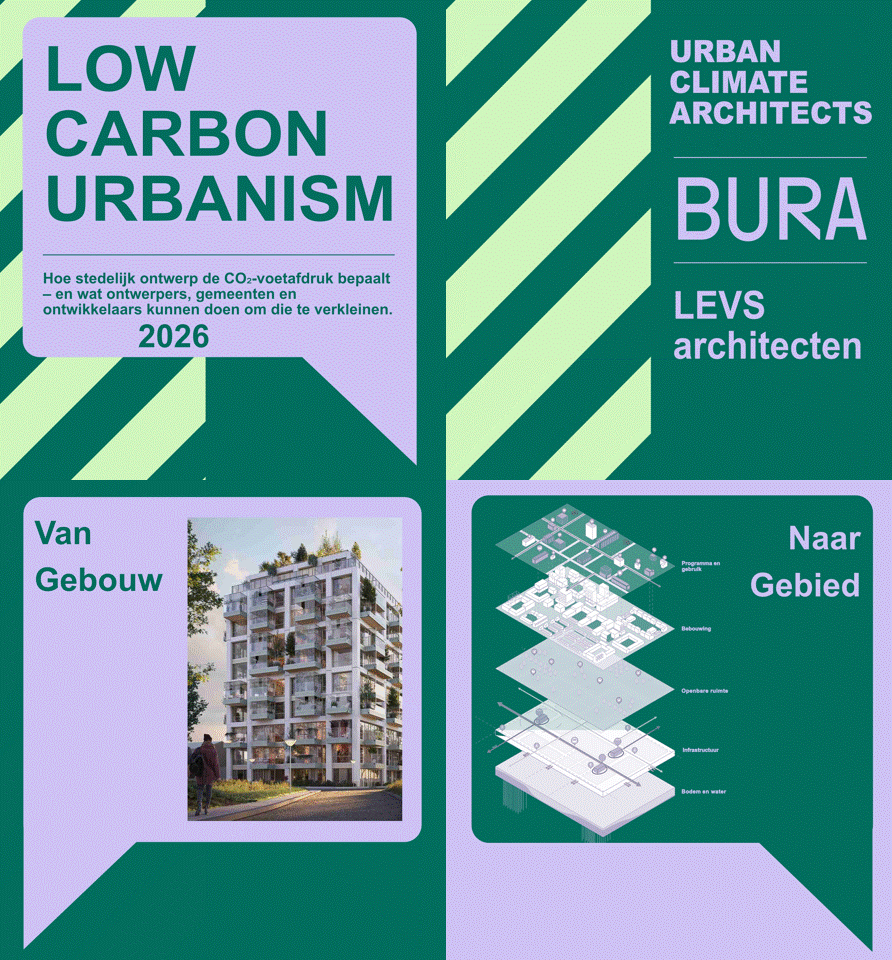

From building → to area
When we map CO₂, we always see the same pattern:
the building is not the problem, it only comes into view too late.
First, we determine:
• how much infrastructure is needed
• how people are going to move
• how soil and water are arranged
• how many m² per person will be built
• what materials the public space requires
Only then do we design the building. That's where the fault line is — and that's where the profit lies.
Cases: from theory to practice
The Urban Woods — less m², more life
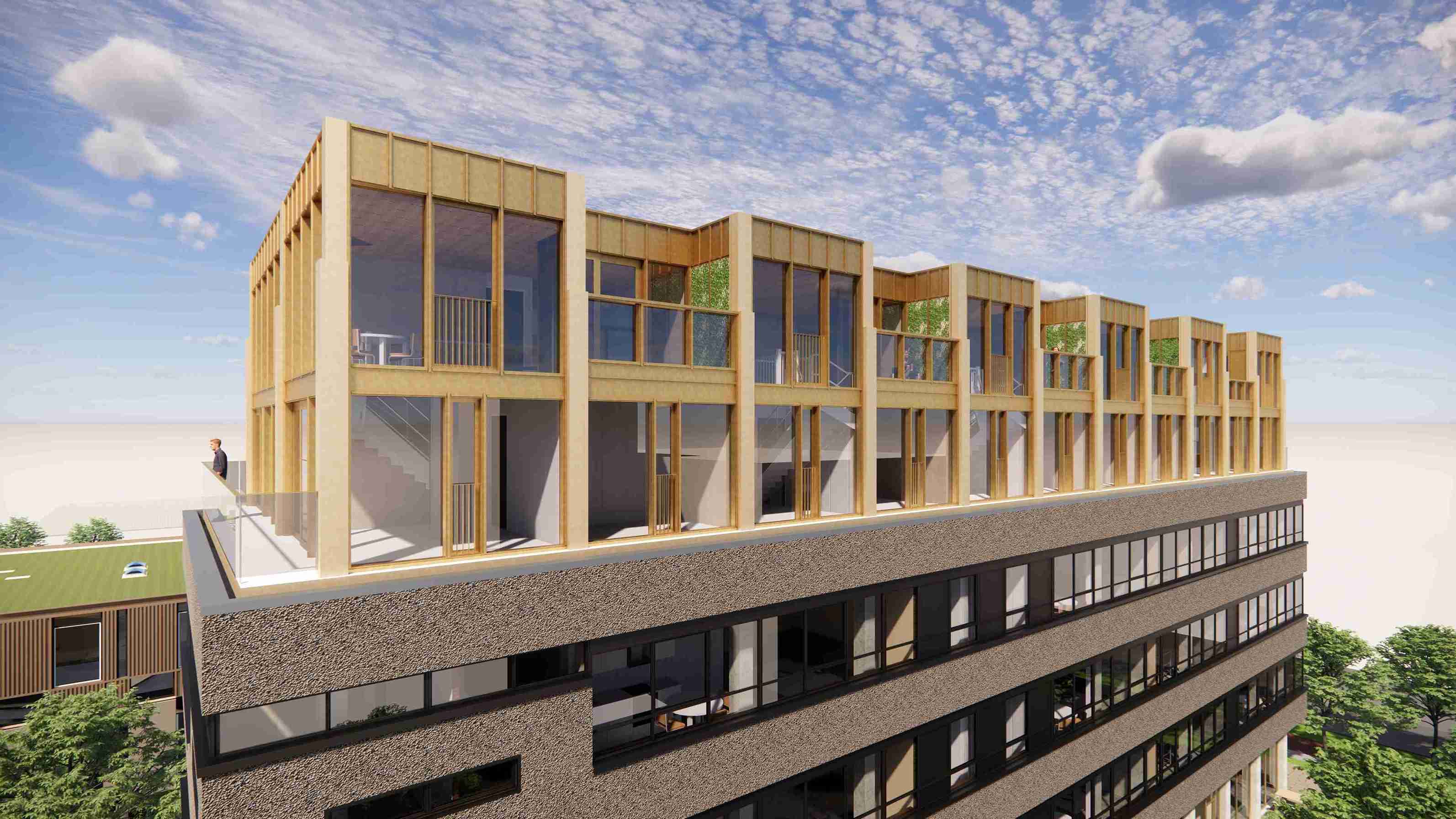
A wooden residential building where compact homes, shared spaces and biobased materials come together. A healthy, warm living quality with a low CO₂ impact.
Schiehaven Noord — densifying with a vision
Area development focused on reuse, climate-adaptive public space and smart urban densification.
By using existing buildings and cleverly densifying them, the additional CO₂ impact remains minimal, while the city gains space.
Download het onderzoek

Meer informatie of samenwerken?
Neem contact op voor meer informatie of samenwerking!