
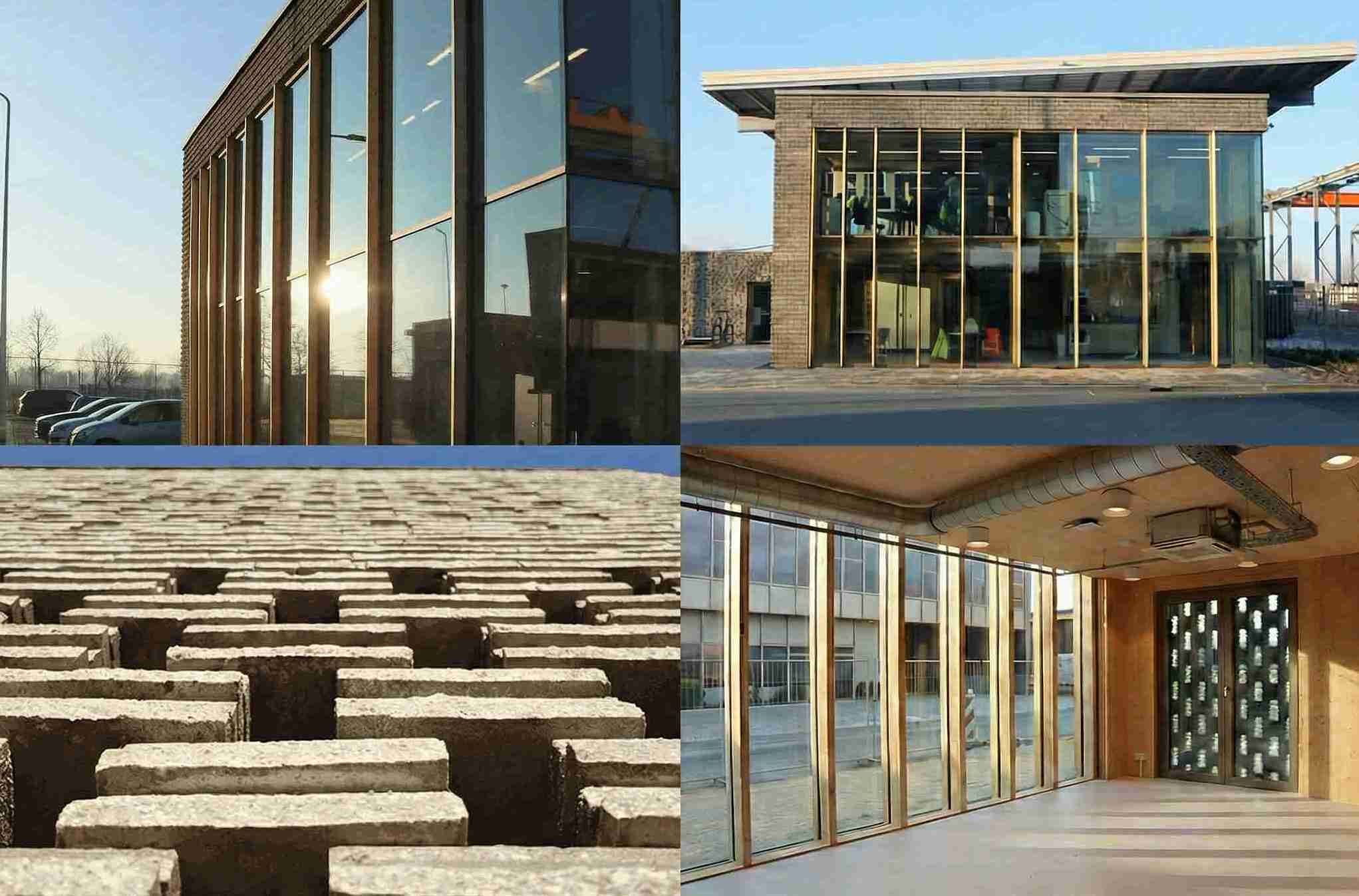
What does Paris Proof construction mean?
Paris Proof construction means that a building aligns with the 2050 climate goals. This implies that a building must not only consume little energy but also generate less CO₂ through the materials it's made from.
In traditional construction, concrete, steel, and other materials often lead to high CO₂ emissions. That's why, with Paris Proof construction, we consider questions like these early on:
- What materials do we use?
- How much CO₂ is released during production and construction?
- How long will the building last?
- Can materials be reused later?
- How healthy and pleasant is the building for residents or users?
This way, sustainability isn't an afterthought, but the starting point of the design.
Why Paris Proof construction is important for public clients
Public clients don't just build for today. They build for residents, students, healthcare users, neighborhoods, and future generations. Therefore, choosing Paris Proof construction is also a societal choice.
For municipalities, Paris Proof construction can help make climate policy visible in real projects. For housing corporations, it offers a path to affordable, healthy, and future-proof homes. For public institutions, it enables sustainable buildings that require less energy and are more pleasant to inhabit.
Paris Proof construction aligns with themes that are becoming increasingly important in public projects:
- CO₂ reduction
- affordable housing
- healthy living environments
- circular construction
- nature-inclusive construction
- climate-adaptive design
- stricter requirements for the environmental performance of buildings and material use
Urban Climate Architects translates these ambitions into feasible architecture. Not with grand statements, but with smart choices in design, materials, technology, and execution.
Timber construction as a logical choice for Paris Proof projects
Timber construction is one of the most logical ways to build Paris Proof. Wood regrows and stores CO₂ during its growth. When timber is used in buildings, this CO₂ remains stored for a long time.
Therefore, timber construction can help reduce the embodied emissions of buildings. This is particularly important for housing, schools, public buildings, and urban densification.
At Urban Climate Architects, we use timber construction as a design strategy. It's not just about the material itself, but about the entire system surrounding it: lightweight structures, prefabricated construction, less construction waste, dry assembly, and a pleasant indoor climate.
This is particularly relevant for public housing. As a timber housing architect, Urban Climate Architects assists housing corporations and municipalities with residential buildings that are affordable, healthy, and climate-conscious.
CLT and Biobased Materials in Public Buildings
CLT, or Cross Laminated Timber, is a strong timber construction material suitable for larger buildings. This includes apartments, schools, healthcare facilities, community centers, and additional floors on existing buildings.
Because CLT is largely prefabricated, construction can often proceed faster and cleaner. This is beneficial in busy neighborhoods, near schools that remain open, or in places where disruption needs to be minimized.
Read more about our approach as a CLT architect in the Netherlands.
In addition to CLT, we also work with biobased materials. These are materials made from renewable raw materials, such as wood, flax, hemp, or cellulose. They are well-suited for public projects where health, sustainability, and future value are important.
Biobased construction becomes stronger when combined with circular construction. This means we not only consider the building as it is now, but also what can happen with the materials later.
Passive design as the basis for Paris-Proof buildings
A passive building forms a strong foundation for Paris-Proof ambitions. By reducing energy demand through architectural design first, renewable energy can be used more effectively. Read more about how we translate this into design through our work as a passive house architect.
Paris Proof architecture in practice
Urban Woods Delft
Urban Woods Delft shows how biobased construction, timber architecture and nature-inclusive design can come together in a healthy urban living environment. The project makes Paris Proof design tangible: low environmental impact, strong spatial quality and careful attention to people, materials and the city.
Link to project The Urban Woods
De Knoest
De Knoest demonstrates how mass timber, circularity and social quality can reinforce one another. The project provides clear evidence of UCA’s experience in timber construction, low embodied carbon design and future-proof housing concepts.
Grote Kreek
Grote Kreek brings together architecture, landscape and climate-adaptive design. The project shows how buildings can contribute to a wider living environment in which water, greenery, biodiversity and quality of use work as one.
Link to project page Grote Kreek
Paris Proof Construction and Affordability
A frequently asked question is: won't Paris Proof construction be more expensive?
The honest answer is: it depends on the design. If sustainable choices are only added late in the process, they can become costly. However, if Paris Proof construction is integrated from the outset, it provides control over costs, material use, and construction time.
Timber construction offers several advantages, including prefabrication, lighter structures, and shorter construction times. The relatively low weight of timber makes it particularly suitable for rooftop extensions and building transformations. Project costs are influenced not only by material prices, but above all by intelligent design decisions, economies of scale, efficient planning, and effective collaboration between the architect, structural engineer, and contractor.
Paris Proof construction doesn't demand more complexity. It demands earlier consideration.
A Timber rooftop extension and Densifying with Less CO₂
Many municipalities are looking for ways to create additional housing without consuming valuable open space. Rooftop extensions the addition of new storeys to existing buildings offer an effective and sustainable solution for urban densification.
Timber construction is particularly suitable for this, as wood is lighter than concrete and steel. This allows for more frequent construction on existing structures, with less extensive reinforcement.
With a rooftop extension using timber construction, public clients can add new homes within existing neighborhoods. This creates densification without major urban sprawl, with less material impact and reduced pressure on the landscape.
This makes a timber rooftop extension with timber construction a strong Paris Proof strategy for cities aiming for growth and sustainability.
Traditional Construction vs. Paris Proof Timber Construction
Traditional construction
Paris Proof timber construction with CLT and bio-based materials
Urban Climate Architects as a partner for public projects
Urban Climate Architects designs buildings that contribute to a healthy, social, and climate-resilient living environment. We combine architecture with research, material innovation, and practical knowledge of timber construction.
Our projects demonstrate how Paris Proof building can become a reality. Consider Urban Woods Delft, De Knoest, and Grote Kreek: projects where timber construction, bio-based materials, and a low CO₂ impact converge.
We also research new circular timber applications such as C-CLT, where secondary timber is processed into high-quality structural building panels. This can further reduce the CO₂ footprint of timber construction.
Our vision aligns with low carbon buildings: buildings that emit less, require fewer primary raw materials, and retain more value for the future.
For public clients, this means an architect who not only designs but also contributes ideas on policy, procurement, feasibility, material selection, and social impact.


