
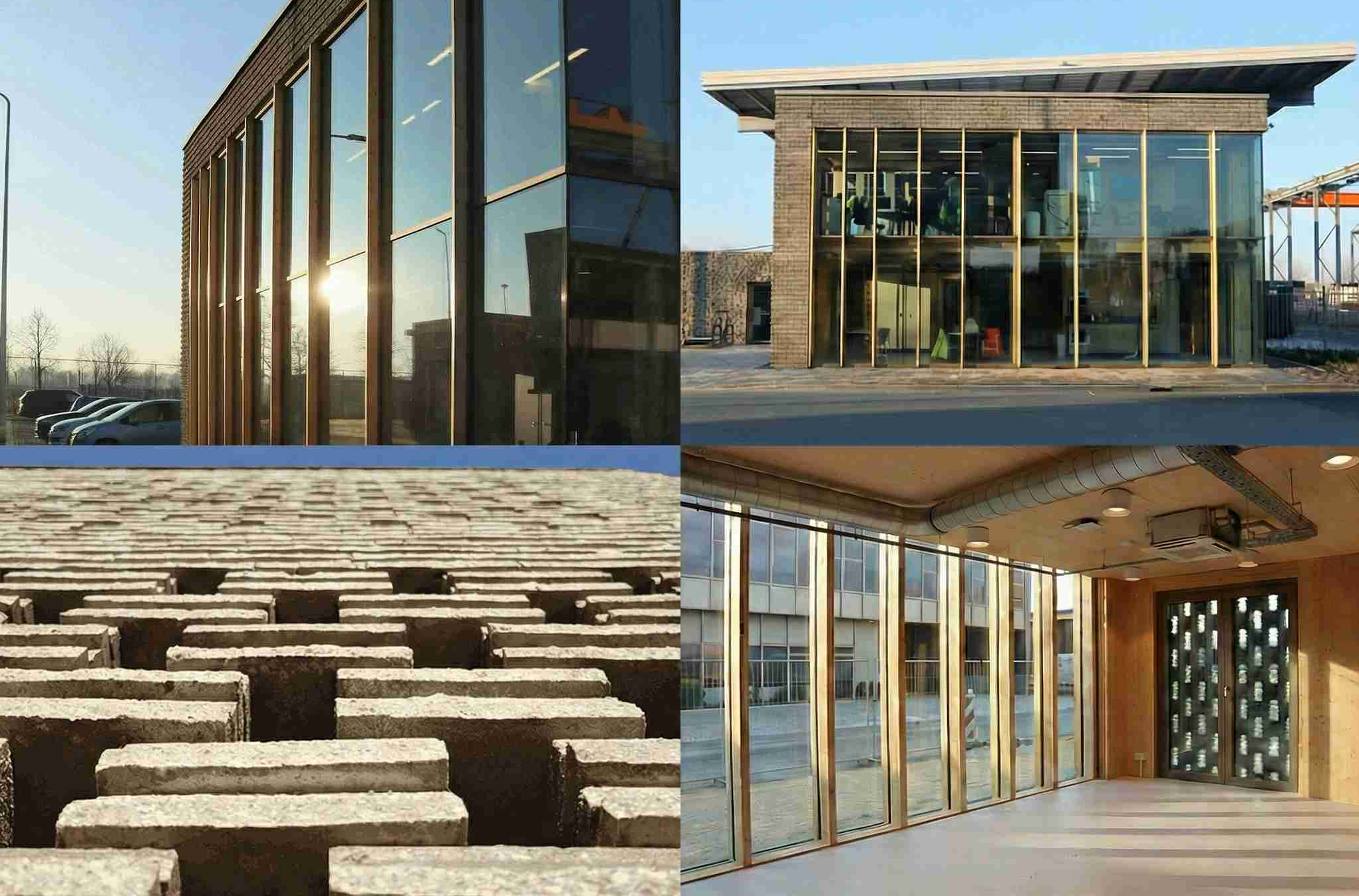
Why is biobased construction becoming more important?
The construction sector is responsible for a significant share of global CO₂ emissions — and much of that impact is already locked into the production of materials before a building is even constructed. With Dutch and European climate targets for 2030 and 2050 approaching, clients, local authorities and developers are looking for building methods that reduce that impact.
Biobased construction is no longer a niche choice. It is becoming part of mainstream procurement, policy and design strategies, including through the Dutch National Approach to Biobased Building. On our Research & Innovation page, we show how Urban Climate Architects connects research, material innovation and practical design experience.
How does Urban Climate Architects apply biobased construction?
At Urban Climate Architects, we combine biobased materials with our experience in mass timber architecture and CLT design in the Netherlands. This means we do not only use timber as a structural material, but also look at insulation, finishes and façade materials made from renewable sources.
Our research into Circular CLT as a circular building material, developed in collaboration with TNO, is a direct example of this approach. We explore how building methods can be made more sustainable without compromising quality, safety or lifespan. In our Handbook for Dutch Mass Timber in Detail, we also share practical reference details for CLT and mass timber design in Dutch housing.
Biobased construction versus timber construction: what is the difference?
Timber construction is a form of biobased construction, but biobased construction is broader. It also includes insulation materials such as wood fibre or hemp fibre, façade cladding and even natural-based paints and finishes.
At UCA, we see timber construction as the foundation — and biobased construction as the way to carry that foundation through the whole building. For clients comparing materials on carbon impact, construction speed and long-term value, our page on timber vs concrete offers a useful next step.
Biobased construction in practice
Biobased construction becomes most powerful when it is linked to real design questions. How can we add homes without using unnecessary new materials? How can we transform existing buildings? How can we build lightly on existing structures? And how can cities become more climate-adaptive and nature-inclusive?
For UCA, the strength lies in this combination. We do not treat biobased materials as a separate feature. We use them as part of a wider strategy for sustainable architecture, circular construction and urban densification. This also connects to our work as a sustainable architect for procurement, where material choices, policy goals and design quality need to come together.
Benefits of biobased construction
Biobased construction can contribute to:
- lower embodied carbon
- carbon storage in materials such as timber
- reduced use of finite raw materials
- lighter building structures
- healthier indoor environments
- better alignment with circular building principles
- long-term value for clients and communities
The benefits vary by project. That is why a strong biobased design starts with an integrated assessment of location, function, structure, budget, regulation and material flows. The costs of timber construction are an important part of that assessment, especially when biobased choices are compared with conventional construction methods.
Biobased construction, Paris Proof design and circular building
Biobased construction is closely linked to wider climate goals. Renewable materials can support lower embodied carbon, while circular design helps keep materials in use for longer. This makes biobased strategies highly relevant for clients working towards Paris Proof architecture and circular construction in the Netherlands.
In renovation, optopping and urban densification, biobased materials can also reduce structural load and make better use of existing buildings. For projects where extra floors are added to existing structures, our work as a timber optopping architect shows how light, renewable materials can support sustainable growth within the city.
Want to know more?
Curious to see what biobased construction can mean in practice? Explore our Handbook for Dutch Mass Timber in Detail or visit our Research & Innovation page for more publications, tools and project-based insights.


