Mass Timber for a Future-Ready Manufacturing Industry
At Nijverheidsweg in Voorhout, in the municipality of Teylingen, we are designing an innovative 3,667 m² GFA production hall in mass timber construction. This project demonstrates that sustainable construction and biobased building are not limited to residential projects, but can also play a powerful role in the future of the manufacturing industry.
Production, logistics and office functions come together in one clear and future-ready structure. A place where timber architecture is not only designed, but also produced. In doing so, the project strengthens the value chain of CLT construction in the Netherlands and contributes to an industry where circularity, innovation and climate-conscious building go hand in hand.
This is circular construction in practice in the Netherlands.
Sustainable construction starts at the source
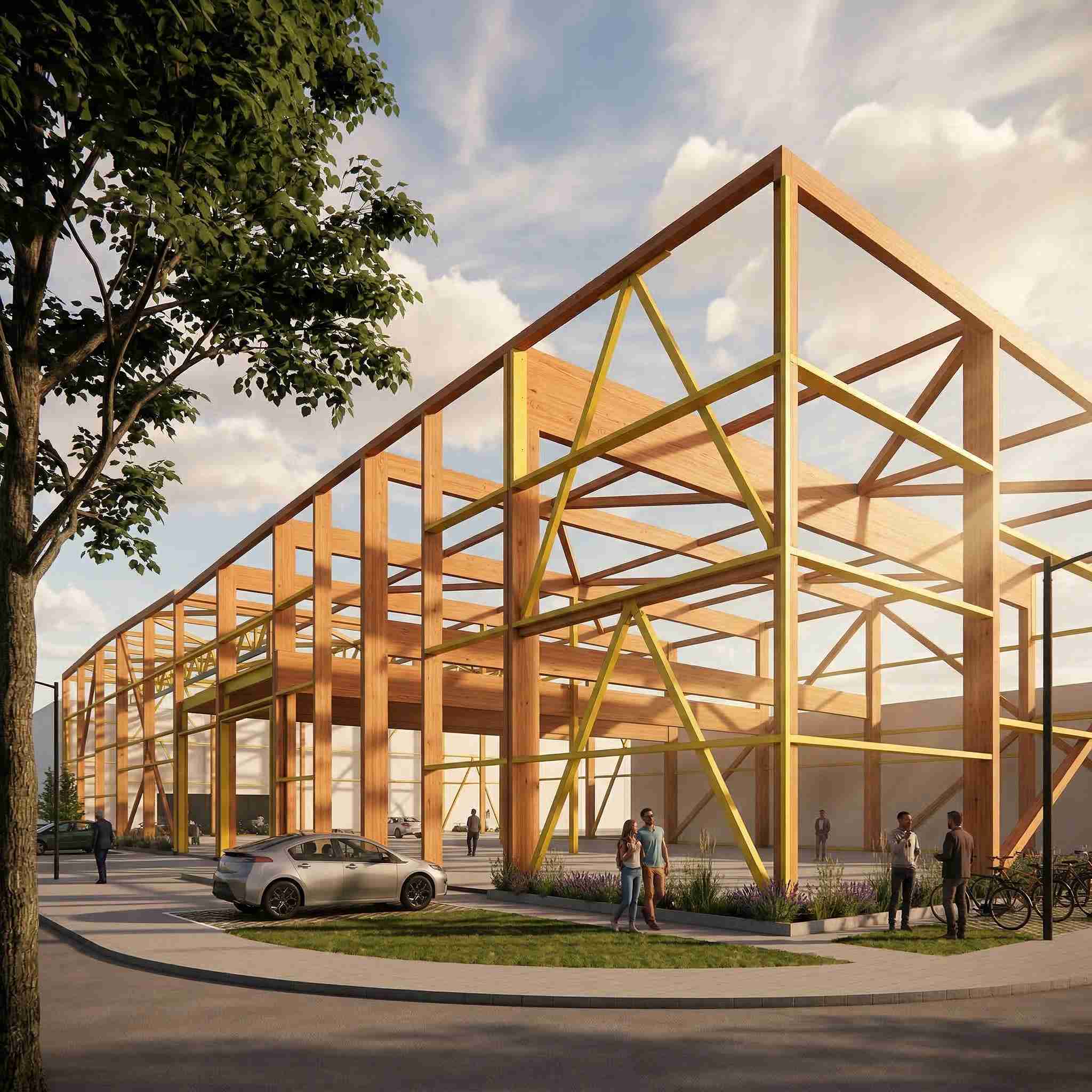
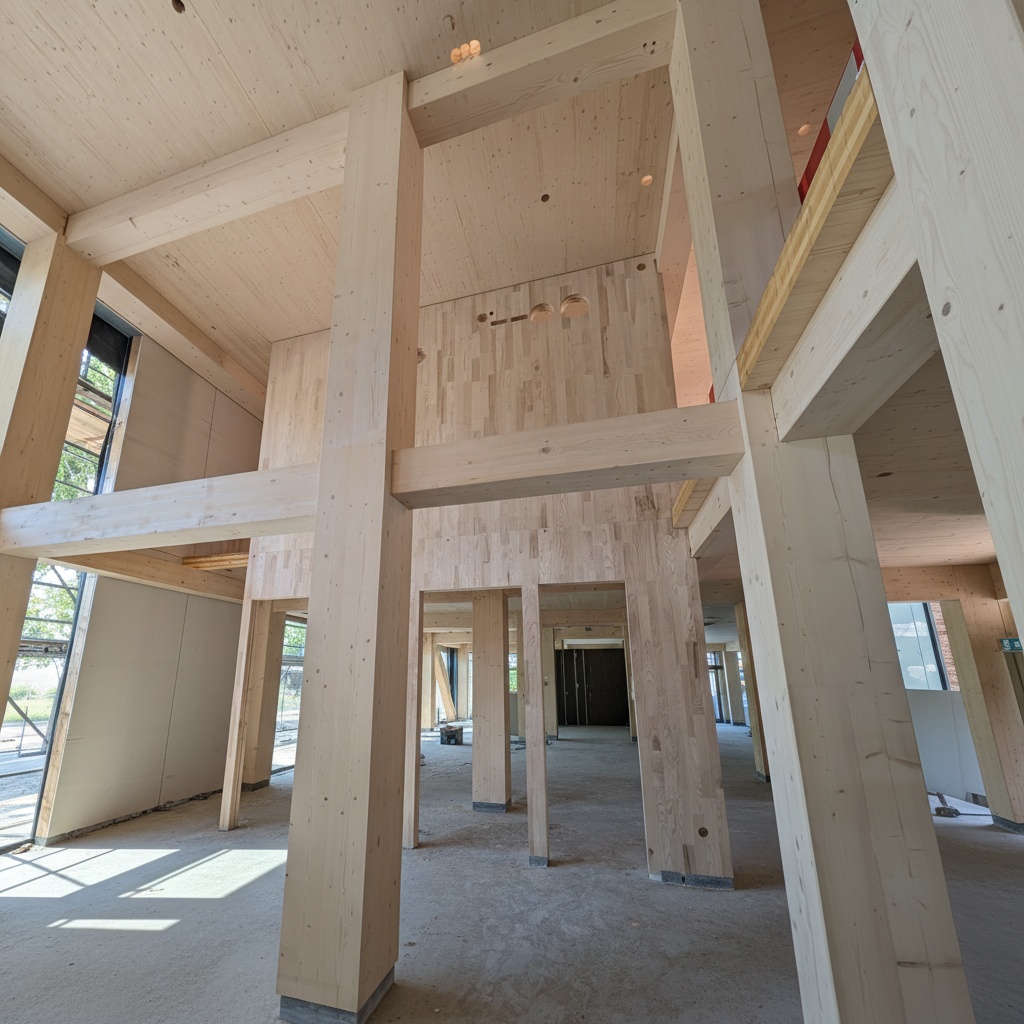
The production hall was designed as a structural system in mass timber, built from CLT (cross-laminated timber) and glulam. By choosing biobased materials, the building significantly reduces CO₂ emissions compared to conventional steel or concrete industrial structures.
Mass timber construction offers clear advantages:
Carbon storage within the structure
- Significantly lower environmental impact
- Lightweight and efficient construction methods
- Fast assembly with fewer transport movements
- A healthy and comfortable indoor climate
Sustainable construction becomes truly powerful when the production chain itself becomes part of the transition. With this facility we strengthen the development of engineered timber buildings in the Netherlands — from design and engineering to timber element production.
This is where the infrastructure of timber architecture in the Netherlands continues to grow.
Flexible design for a changing industry
The production hall was designed with large column-free spanish, creating maximum flexibility for manufacturing processes, storage and logistics.
The building can also be easily divided into multiple units, allowing it to adapt and grow with the ambitions of its users.
Inside, a clear spatial organization supports:
- a largely automated production line
- efficient storage zones
- a light-filled office floor overlooking the production hall
Transparency and collaboration are central to the design. The architecture makes the manufacturing process visible — and with it the innovation behind it.
Gentlemen, mass timber construction proves its strength on an industrial scale.
Climate-adaptive and nature-inclusive design
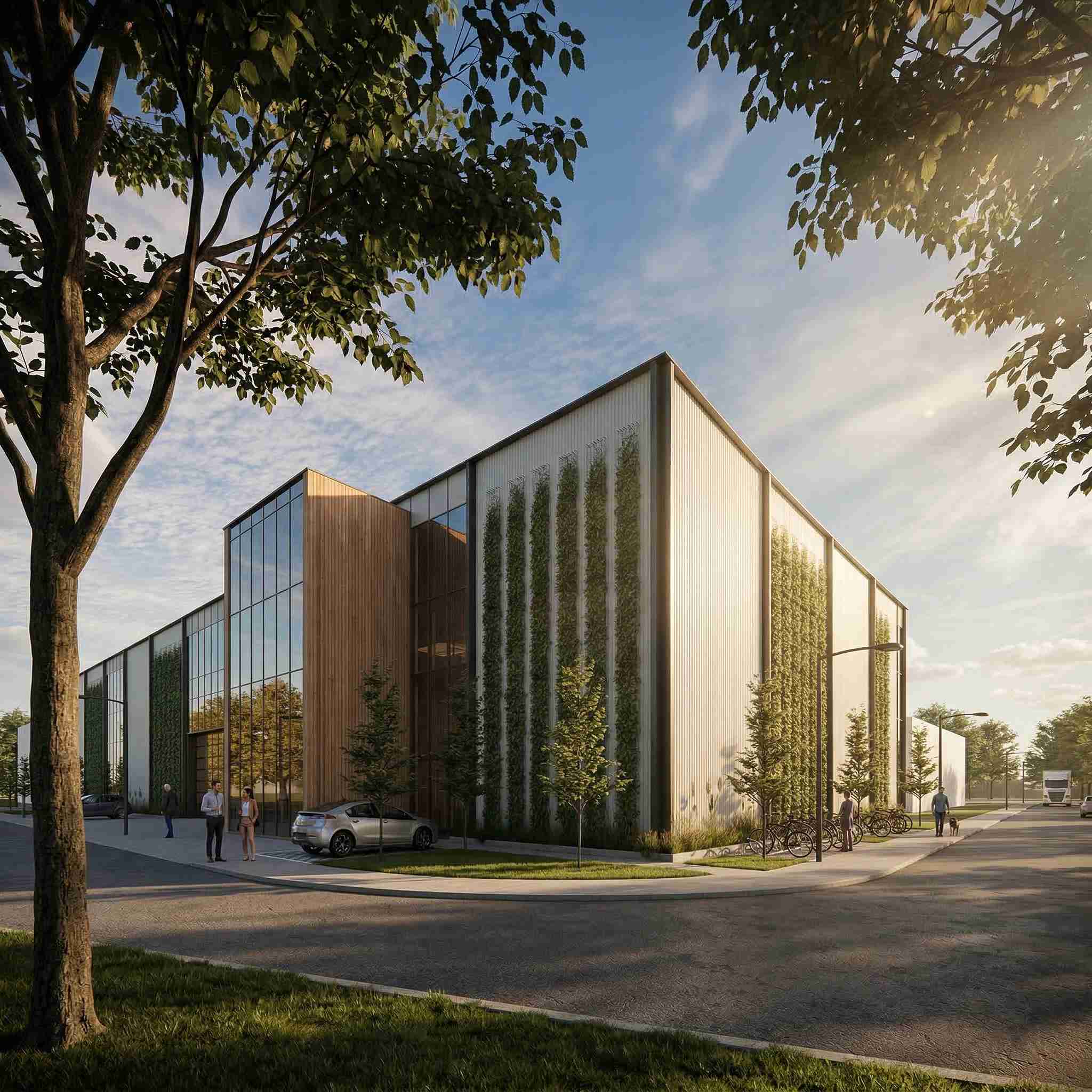
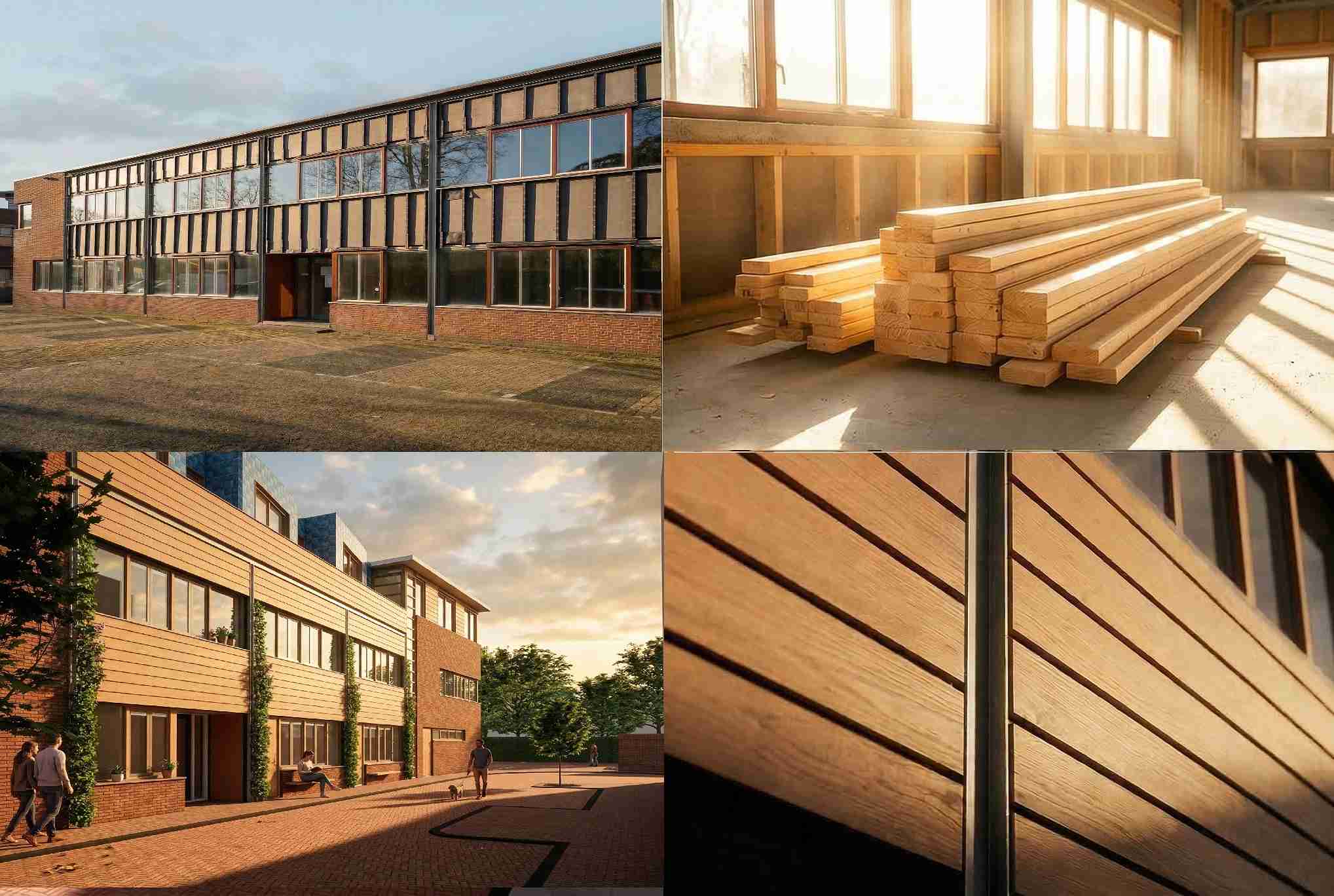
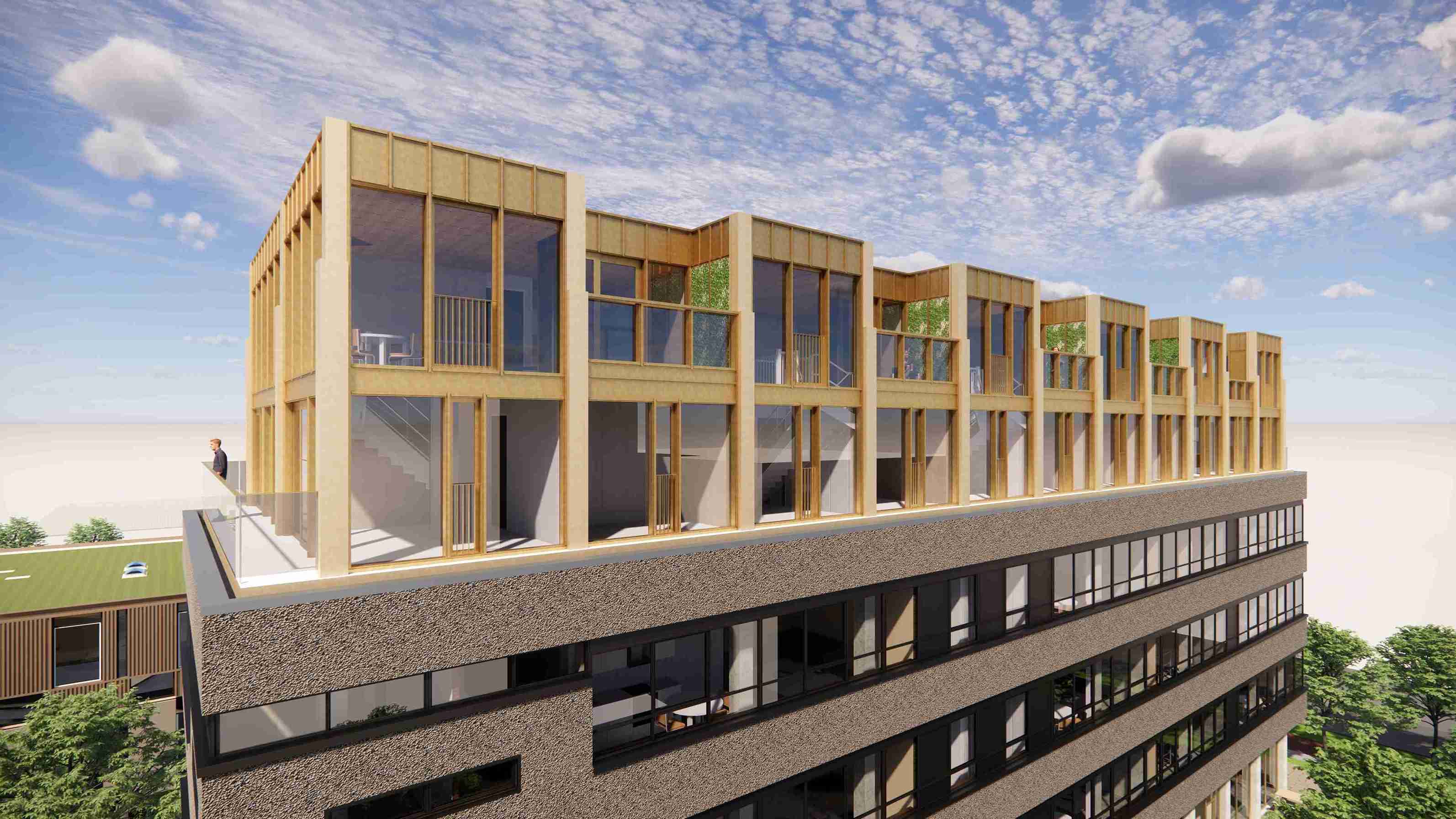
The production hall is located on a site with three public edges and therefore receives an open and high-quality architectural expression. The façade features a vertical rhythm with reused timber columns and boards, combined with transparent curtain walls and climbing greenery.
This combination strengthens both the architectural identity and the ecological value of the building.
The design follows the principles of:
- climate-adaptive design
- nature-inclusive construction
- urban biodiversity design
The south-west façade is used for energy generation through integrated photovoltaic panels. At ground level, permeable paving and green planting zones help reduce heat stress, enhance biodiversity and support rainwater infiltration.
Hard surfaces where necessary.
Green space wherever possible.
Light, space and wellbeing at work
Inside, the production hall reaches a height of 12 metres, with generous daylight entering through large glazing surfaces and rooflights.
The orientation and positioning of the façades prevent overheating while optimising the indoor climate. The result is a comfortable working environment with abundant daylight, air and spatial quality.
The office floor overlooks the production hall, maintaining a visual connection between the manufacturing process and the people working there.
Mass timber construction contributes to a warm, healthy workplace, where material, space and wellbeing come together.
A sustainable impulse for the Teylingen business district
The municipality of Teylingen is committed to energy-neutral and climate-resilient business parks, and this project aligns closely with those ambitions.
With a site of approximately 4,596 m² and a building footprint of around 3.029 m², the design uses space efficiently and responsibly. Rhythmic facades, natural materials and integrated greenery give the business park a sustainable and high-quality character.
This is sustainable construction at industrial scale.
Biobased.
Circular.
Future-ready.
Contact for more information

_11zon.jpg)
_11zon.jpg)
_11zon.jpg)




.jpg)


.jpg)




%20-%20uc%20architects.jpg)










.jpg)






.jpg)